
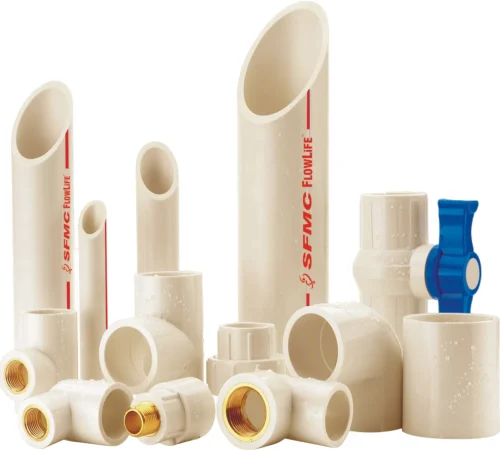
CPVC pipes for hot water are designed to handle elevated temperatures, pressure, and everyday plumbing demands, making them a reliable choice for residential hot water systems. Unlike conventional PVC and many metal pipes, CPVC offers a corrosion-resistant and low-maintenance solution for hot and cold water applications.
But the real question is: what happens to your home when the wrong pipe is used for hot water?
The answer often remains hidden inside your walls.
Every Home Has a Story It Doesn’t Tell You — Until Something Breaks
Every home has a story it doesn’t tell you — until something breaks.
It usually starts small.
A slight drop in water pressure. A change in water quality. A pipe joint that feels warmer than expected. These signs can easily be ignored because the plumbing system is mostly hidden from view.
But over time, problems with hot water pipes can become much more expensive.
A damaged pipe behind a wall can lead to water leakage, dampness, wall damage, repairs, and unnecessary renovation costs.
The problem is that homeowners often think about plumbing only when something goes wrong.
Why Do Hot Water Pipes Age Over Time?
When a home is constructed, plumbing materials are expected to perform for years. However, constant exposure to heat, pressure, water, and environmental conditions can affect the long-term performance of a plumbing system.
Traditional metal pipes can be vulnerable to corrosion and scaling, while standard PVC is generally not the preferred material for sustained hot-water applications.
This raises an important question:
What type of pipe should be used for hot water in a home?
For many residential plumbing applications, CPVC is specifically engineered for this purpose.
CPVC Pipes for Hot Water: What Makes Them Different?
CPVC, or Chlorinated Polyvinyl Chloride, is a thermoplastic piping material designed for hot and cold water distribution.
Its properties make it particularly suitable for residential plumbing systems where temperature resistance, durability, and low maintenance are important.
Can CPVC Pipes Handle Hot Water?
Yes. CPVC pipes are designed for hot and cold water plumbing applications.
Their temperature resistance allows them to be used in residential hot water distribution systems when the piping system is properly designed, installed, and operated according to the manufacturer’s specifications.
This makes CPVC a practical alternative to materials that are not designed for continuous hot-water service.
What Are the Benefits of CPVC Pipes for Hot Water?
The major CPVC pipe benefits include:
- Heat resistance: Suitable for hot water distribution when used within specified temperature and pressure limits.
- Corrosion resistance: CPVC does not rust like conventional metal piping.
- Low maintenance: Its corrosion-resistant properties can help reduce maintenance requirements.
- Lightweight construction: CPVC pipes are easier to handle and install than many traditional metal systems.
- Smooth internal surface: Helps maintain efficient water flow.
- Long-term performance: Properly selected and installed CPVC systems can provide dependable residential plumbing service.
Is CPVC Safe for Drinking Water?
For potable-water applications, CPVC piping products manufactured and certified for drinking-water use can be used in residential plumbing systems.
The important point is to select CPVC pipes that meet the applicable standards and certifications for potable water and to follow the manufacturer’s installation guidelines.
This makes material selection just as important as installation quality.
CPVC vs PVC: Which Is Better for Hot Water?
One of the most common questions in residential plumbing is CPVC vs PVC.
The key difference is their intended application.
PVC is widely used for cold-water and drainage applications, while CPVC is specifically formulated to handle higher temperatures and is commonly used for hot and cold water distribution.
Therefore, when designing a residential hot-water system, CPVC is generally the more appropriate choice where its specifications match the application.
The right material isn’t simply about choosing a cheaper pipe. It is about choosing a pipe designed for the job.
Why Do Architects and MEP Contractors Choose CPVC Plumbing?
Plumbing professionals look beyond the initial installation. They also consider durability, temperature performance, maintenance, installation requirements, and long-term reliability.
For residential plumbing, CPVC can offer a combination of:
- Hot and cold water compatibility
- Corrosion resistance
- Ease of handling
- Reliable water flow
- Reduced maintenance requirements
- Long-term system performance
When these factors are considered during the design stage, the plumbing system can become one less thing homeowners need to worry about.
The Home That Ages Well
A home isn’t built only with bricks, concrete, glass, and steel.
It is also built with thousands of decisions that remain hidden after construction is complete.
The plumbing system is one of them.
Choosing the right hot water pipes early can help reduce the risk of problems associated with unsuitable materials, poor installation, corrosion, and premature replacement.
The best plumbing system is often the one you don’t notice.
It simply works.
Choosing the Right CPVC Pipes for Your Home
Before selecting a CPVC plumbing system, homeowners, architects, and contractors should consider:
1. Application
Determine whether the system is intended for hot water, cold water, or both.
2. Temperature and pressure requirements
Always ensure the selected pipe and fittings are rated for the expected operating conditions.
3. Product standards and certification
For potable water applications, choose products that comply with applicable standards and certifications.
4. Installation quality
Even a high-quality pipe requires correct installation to perform reliably.
5. Manufacturer specifications
Follow the manufacturer’s recommended installation, joining, support, and operating guidelines.
These decisions can make a significant difference to the long-term performance of a residential plumbing system.
Engineering the Infrastructure Behind Every Drop
At SFMC India Pipes & Fittings, we don’t just manufacture pipes and fittings. We focus on developing dependable piping solutions for the infrastructure that supports everyday life.
From residential plumbing to construction and agricultural applications, SFMC India manufactures CPVC, PPR, and HDPE pipes and fittings designed for reliable performance across different water infrastructure requirements.
When the pipe is inside the wall, quality matters even more.
Because you may never see it.
But your home depends on it every day.
Strong Pipes. Stronger Tomorrows.
The journey of water doesn’t end when it reaches your home.
It continues through the pipes behind your walls, across your bathrooms, kitchens, water heaters, and every place where water is needed.
Choosing the right CPVC pipes for hot water means making an important infrastructure decision before a problem appears.
Strong Pipes. Stronger Tomorrows.
SFMC India manufactures CPVC, PPR, and HDPE pipes and fittings engineered for reliability across residential, construction, and agricultural infrastructure.
#SFMCIndia #CPVCPipes #CPVCPipesForHotWater #HotWaterPipes #CPVCPlumbing #PipesAndFittings #HomePlumbing #ResidentialPlumbing #ConstructionIndustry #MEP